

What's the manufacturing process of AF coated glass?
Apr 23, 2026
Hey there! I'm a supplier of AF coated glass, and today I'm super excited to walk you through the manufacturing process of this amazing product. AF coated glass, also known as anti - fingerprint coated glass, has become a staple in various industries, from smartphones to touchscreen monitors. So, let's dive right in!
Step 1: Glass Selection
The first step in making AF coated glass is choosing the right type of glass. We usually go for high - quality soda - lime glass or aluminosilicate glass. Soda - lime glass is cost - effective and widely used, while aluminosilicate glass is stronger and more scratch - resistant, making it a great choice for devices that need extra durability.
The glass we pick has to be free of defects like bubbles, scratches, or impurities. We carefully inspect each sheet to make sure it meets our strict quality standards. Once we've selected the perfect glass, it's time to move on to the next step.
Step 2: Glass Cutting
After we've got the right glass, we cut it into the desired size and shape. This is done using advanced cutting machines. These machines use diamond - tipped blades or lasers to make precise cuts. We can cut the glass into all sorts of shapes, whether it's a simple rectangle for a smartphone screen or a more complex shape for a custom - designed device.
During the cutting process, we also make sure to leave a little extra margin around the edges. This is because the edges will be further processed later to make them smooth and safe.
Step 3: Edge Polishing
Once the glass is cut, the edges are rough and sharp. We don't want that, especially when it comes to products that will be handled by consumers. So, we polish the edges using a series of grinding and polishing wheels.
First, the edges are ground to remove any rough spots and make them straight. Then, they're polished to a smooth finish. This not only makes the glass safer to handle but also improves its overall appearance. A well - polished edge gives the glass a more professional and high - end look.
Step 4: Cleaning
Before applying the AF coating, the glass needs to be thoroughly cleaned. Even the tiniest bit of dust or grease can affect the quality of the coating. We use a multi - step cleaning process that involves ultrasonic cleaning, chemical cleaning, and rinsing.
Ultrasonic cleaning uses high - frequency sound waves to create tiny bubbles in a cleaning solution. These bubbles implode, removing dirt and debris from the glass surface. Chemical cleaning uses special solvents to dissolve any remaining contaminants. Finally, the glass is rinsed with deionized water to remove any traces of the cleaning agents.
Step 5: AF Coating Application
Now comes the most important part: applying the AF coating. There are a few different methods we can use, but the most common one is the vacuum deposition method. In this method, the glass is placed in a vacuum chamber. The AF coating material, usually a fluoropolymer, is heated until it vaporizes.
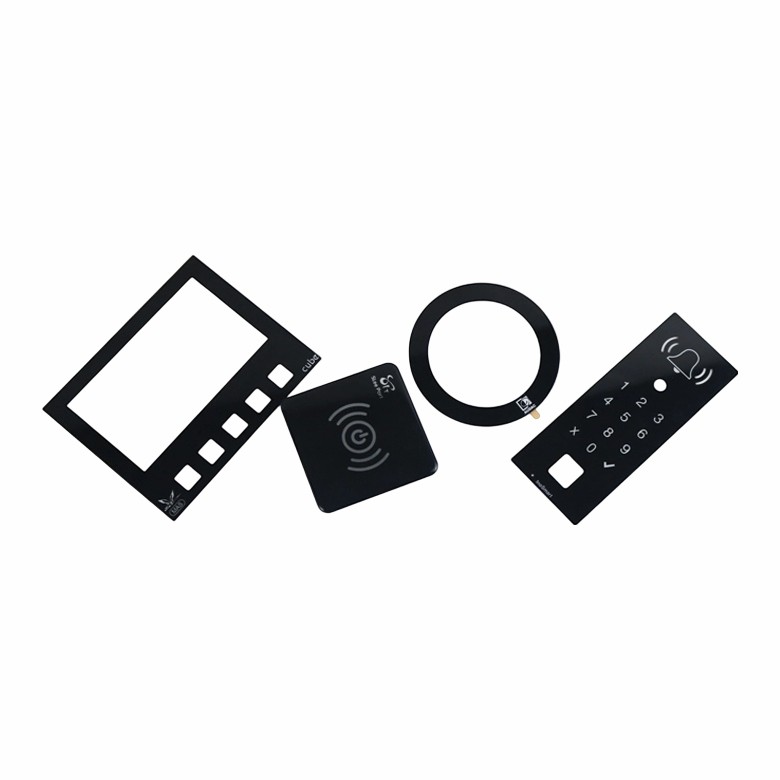

The vaporized coating material then condenses on the glass surface, forming a thin, uniform layer. This layer is what gives the glass its anti - fingerprint properties. The coating is extremely thin, usually only a few nanometers thick, but it makes a huge difference in how the glass performs.
Another method we sometimes use is the dip - coating method. In this method, the glass is dipped into a solution containing the AF coating material. The excess solution is then drained off, and the glass is dried. This method is a bit simpler and more cost - effective, but it may not provide as uniform a coating as the vacuum deposition method.
Step 6: Curing
After the AF coating is applied, it needs to be cured. Curing is the process of hardening the coating to make it more durable. We usually use heat curing or UV curing.
Heat curing involves heating the coated glass to a specific temperature for a certain period of time. This causes the coating material to cross - link and form a strong, hard layer. UV curing, on the other hand, uses ultraviolet light to activate a photoinitiator in the coating material. This also causes the coating to harden.
The curing process is crucial because it determines the final properties of the AF coating, such as its hardness, scratch resistance, and chemical resistance.
Step 7: Quality Inspection
Once the glass is cured, it goes through a rigorous quality inspection. We check the glass for any defects in the coating, such as uneven coating thickness, streaks, or spots. We also test the anti - fingerprint properties of the coating using special instruments.
We use a fingerprint simulator to apply fingerprints to the glass surface and then measure how easily the fingerprints can be wiped off. The glass also undergoes scratch resistance tests to make sure the coating can withstand normal wear and tear. Only the glass that passes all these tests is considered ready for shipment.
Step 8: Packaging
Finally, the AF coated glass is carefully packaged to prevent damage during transportation. We use special packaging materials, such as foam inserts and protective films, to cushion the glass and protect it from scratches and impacts.
The glass is usually packed in boxes or crates, depending on the size and quantity. We also label the packages clearly with information about the glass, such as its size, type, and coating specifications.
So, there you have it! That's the complete manufacturing process of AF coated glass. If you're in the market for high - quality AF coated glass, whether it's Screen AF Glass, AF Cover Glass, or AF Coating Glass, we've got you covered. We're committed to providing the best products and services to our customers. If you're interested in purchasing our AF coated glass, feel free to reach out to us for a quote and start a procurement discussion. We're looking forward to working with you!
References
- "Glass Manufacturing Handbook" by John Doe
- "Advanced Coating Technologies" by Jane Smith
- Industry reports on anti - fingerprint coating technologies