

Silk Screen Printing on Cover Glass: Ink Selection, Registration and Durability
Nov 27, 2026
1. What Is Silk Screen Printing on Glass?
Silk screen printing is a process that transfers ink onto a glass surface through a patterned mesh screen.
A squeegee pushes the ink through the open areas of the screen, creating the required pattern on the glass.
After printing, the ink must be dried or cured according to its specific formulation.
For custom cover glass, common printing applications include:
Black or white decorative borders
Brand logos and product identification
Touch-control icons
Transparent or translucent windows
Functional markings
Decorative color patterns
The printing design is normally prepared from a customer's CAD drawing or artwork file.
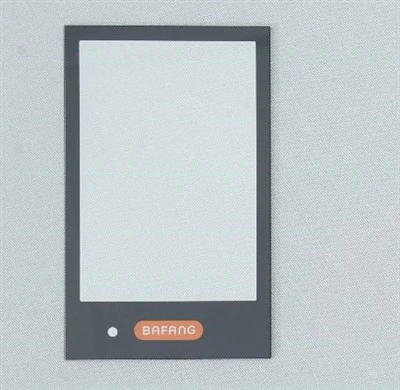
2. Ceramic Ink vs. Organic Ink: What Is the Difference?
One of the most important decisions in glass screen printing is ink selection.
Two broad categories are ceramic-based inorganic inks and organic inks. Their performance and processing requirements are different.
Ceramic Ink
Ceramic ink generally contains inorganic pigments and glass frit.
During firing, the glass frit softens and bonds the printed layer to the glass surface.
Main characteristics:
Strong bonding after proper firing
Good resistance to abrasion
Good chemical and environmental durability
Suitable for applications requiring long-term printed markings
Ceramic ink is often considered for appliance glass, automotive glass, and other applications where durability is important.
However, the firing process requires a compatible temperature profile and glass substrate.
For thermally tempered glass, ceramic printing is commonly integrated into the heat-treatment process, with the ink firing and glass tempering sequence carefully controlled.
Organic Ink
Organic inks use polymer-based binders and are cured through processes such as heat curing or UV curing, depending on the formulation.
Main characteristics:
Suitable for many decorative printing applications
Available in a wide range of colors
Can support fine details and customized graphics
Often compatible with lower-temperature processing
Organic ink can be a suitable option for applications where high-temperature firing is undesirable.
However, adhesion, scratch resistance, chemical resistance, and long-term durability vary significantly by ink formulation and curing conditions.
The actual ink must be tested on the intended glass substrate.
Ceramic Ink vs. Organic Ink
| Item | Ceramic Ink | Organic Ink |
|---|---|---|
| Main composition | Inorganic pigments and glass frit | Organic pigments and polymer binders |
| Curing | High-temperature firing | Heat or UV curing |
| Bonding mechanism | Fired glass-frit bonding | Cured polymer adhesion |
| Abrasion resistance | Generally high after proper firing | Formulation-dependent |
| Chemical resistance | Generally good after proper firing | Formulation-dependent |
| Typical applications | Appliance, automotive, durable glass markings | Electronic cover glass, decorative printing |
| Process compatibility | Requires compatible high-temperature process | Requires compatible curing process |
Neither ink type is automatically suitable for every cover glass project.
The final selection should consider the glass composition, strengthening process, required appearance, and operating environment.
3. How Does the Manufacturing Process Affect Printing Quality?
A reliable silk screen printing process involves several important steps.
Step 1: Glass Surface Preparation
Before printing, the glass surface must be clean and free from dust, oil, fingerprints, and other contaminants.
Poor surface preparation can cause:
Ink pinholes
Uneven printing
Poor adhesion
Localized peeling
Visible contamination
Cleaning and handling procedures should be controlled throughout production.
Step 2: Screen Preparation
The printing screen is made according to the customer's artwork.
Important factors include:
Mesh count
Mesh tension
Emulsion thickness
Screen opening
Artwork dimensions
A higher mesh count can reproduce finer details, but the correct mesh must also match the ink's particle size and required ink deposit.
Very fine lines and small text require careful evaluation before mass production.
Step 3: Printing Registration
Printing registration refers to the alignment between the printed artwork and the glass outline or functional features.
This is especially important for:
Camera and sensor openings
Display viewing windows
Button icons
Multi-color printing
Decorative borders
If the printing position is incorrect, the final glass may not align with the housing, display, or internal components.
For custom cover glass, the print tolerance should be clearly defined in the technical drawing.
GL Glass lists a printing tolerance of ±0.15 mm for its industrial display glass offering. Actual achievable tolerances should be confirmed according to the design, dimensions, and production process.
Step 4: Ink Curing or Firing
After printing, the ink must be processed according to its manufacturer's specifications.
Ceramic ink requires a suitable firing profile, while organic ink may require heat or UV curing.
Incorrect curing can result in:
Poor adhesion
Color variation
Surface defects
Incomplete curing
Reduced durability
The printing process should also be coordinated with chemical strengthening or thermal tempering when both are required.
4. Common Silk Screen Printing Defects on Cover Glass
Understanding common defects helps buyers establish effective quality-control requirements.
| Defect | Possible Cause | Recommended Control |
|---|---|---|
| Ink peeling | Poor surface preparation or curing | Adhesion testing |
| Pinholes | Dust or contamination | Cleanroom-style handling and inspection |
| Uneven color | Inconsistent ink deposit | Color measurement and process control |
| Misalignment | Incorrect registration | Drawing-based dimensional inspection |
| Blurred edges | Incorrect screen or printing parameters | Artwork and screen optimization |
| Scratches | Improper handling or packaging | Protective films and careful handling |
A good inspection plan should include both appearance inspection and functional performance testing.
5. What Should Buyers Specify for Custom Glass Printing?
To receive an accurate quotation and avoid repeated sample adjustments, OEM buyers should provide the following details.
1. Artwork
Provide AI, PDF, DXF, or another suitable vector artwork file.
2. Printing colors
Specify the required colors, preferably with Pantone references or approved physical samples.
3. Printing area
Clearly identify the printed area, transparent windows, and functional openings.
4. Ink requirements
Indicate whether ceramic ink or organic ink is preferred, if known. Otherwise, provide the application and durability requirements.
5. Registration tolerance
Define the acceptable printing position tolerance relative to the glass outline and openings.
6. Durability requirements
Specify any required adhesion, abrasion, chemical resistance, or environmental tests.
7. Production sequence
Discuss the relationship between printing, strengthening, and coating processes before approving the final manufacturing route.
6. Custom Silk Screen Printing Solutions from GL Glass
GL Glass provides custom silk screen printing as part of its cover glass manufacturing services.
Available customization options include:
Black and white printed borders
Custom logos and symbols
Functional icons
Multi-color patterns
Ceramic and resin-based ink options
Printing combined with CNC machining and glass strengthening
For industrial display projects, GL Glass can integrate printing with chemical strengthening, thermal tempering, and AG, AR, and AF surface treatments according to project requirements.
Learn more about our Industrial Display Glass and Consumer Electronics Cover Glass.
Frequently Asked Questions
Can silk screen printing be applied to chemically strengthened glass?
Yes, depending on the ink system and process sequence. The printing and strengthening sequence should be evaluated to ensure compatibility and adhesion.
Is ceramic ink more durable than organic ink?
Ceramic ink generally offers strong abrasion and chemical resistance after proper firing. However, the performance of both ink types depends on the specific formulation and processing conditions.
Can cover glass be printed in multiple colors?
Yes. Multiple colors can be printed using separate screens and controlled registration. The design complexity and production tolerances should be reviewed before sampling.
Can printing be combined with AG, AR, and AF treatments?
Yes, but the process sequence and treated surface must be carefully evaluated. Different coatings and inks may have compatibility requirements.
What files are needed for a custom glass printing quotation?
A 2D drawing and vector artwork are recommended. The files should identify dimensions, print areas, colors, openings, and tolerance requirements.
Request a Custom Cover Glass Printing Quote
Looking for a reliable manufacturing partner for custom printed cover glass?
Send GL Glass your glass drawing, artwork, printing colors, and application requirements.
Our team can evaluate ink selection, printing registration, processing compatibility, and quality-control requirements for your OEM project.
Contact GL Glass to discuss your custom cover glass requirements.


