

What's The Suitable Cover Glass Substrate For Your Product?
Aug 31, 2026
1.AG(Anti glare) Glass
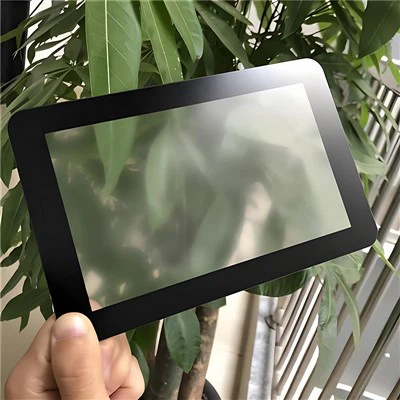
Mitigating surface reflection stands as the core advantage of AG anti‑glare glass. Ask yourself these practical questions for your project:
1.Will your device run outdoors or under intense ambient light?
2.Is surface reflection a top pain point for end‑users?
3.Have you received customer complaints about unreadable display screens?
4.Do end‑users demand eye‑friendly visuals for prolonged operation without eye irritation?
5.Are competing products gaining market traction by highlighting anti‑glare features?
6.Run your fingers over competitors' cover glass samples. Do you feel fine granular textures?
If yes, AG anti‑glare glass is exactly what you need.
Regular Applications
In many updated products which reply on AG glass including rugged military laptops, ATMs, avionic & marine display units, metro onboard screens, medical equipment, agricultural machinery, excavators and other heavy‑duty industrial vehicles.
Corning Gorilla Glass
As a premium high aluminosilicate glass originally popularized for mobile phones, Gorilla Glass delivers outstanding light transmittance, exceptional scratch resistance and robust drop‑impact performance.
Beyond consumer electronics such as phones and smartwatches, it gains massive popularity within industrial control sectors. Many European and American clients explicitly specify Gorilla Glass for projects. Its flawless, crystal‑clear surface brings premium visual appeal to end products.
When your project requires ultra‑high mechanical strength, Corning Gorilla Glass becomes a primary candidate. For reference, a 2.0 mm thick Gorilla Glass sample survives drop tests with a 500g steel ball falling from a 2‑meter height without fracture.
Regular Applications
Smart‑home hardware, medical apparatus, smart handheld terminals, wearable electronics etc.
Practical tip from our specialist: Corning Gorilla Glass carries considerable material costs and expenses rise sharply with larger dimensions.
Do not quote Gorilla Glass blindly at the early stage, as high price may drive your customers away. It fits high‑end premium‑oriented products perfectly. For cover glass over 15‑inch, compare multiple material options, alternative high‑aluminosilicate grades are worthy of evaluation. Read on for further options.
AGC Dragontrail™ Glass
AGC Dragontrail™ from Japan represents another high‑aluminosilicate glass initially developed for smartphonesAGC. It matches Gorilla Glass in high light transmission, scratch‑proof capability and impact endurance. Japanese‑market customers frequently name Dragontrail as their designated material.
Typical Applications
Smart‑Home Devices, Medical Instruments, Smart Handheld Equipment, Wearables.
Panda Glass
Panda Glass is a domestic Chinese high‑aluminosilicate cover‑glass solution. It achieves 92 % light transmittance alongside solid strength, anti‑impact and scratch‑resistant properties. Its biggest merit lies in cost competitiveness. Special non‑standard thickness options (2.5 mm, 3.0 mm, 4.0 mm) are available. Panda Glass serves as a compelling pick for project bidding scenarios where you need balanced performance and favorable pricing.
Integrated‑Black Glass
The integrated‑black aesthetic is highly sought‑after for smart‑home hardware, access‑control panels, smartwatches and related products. Conventional screen‑printing methods for integrated‑black finishes suffer from high defect rates due to ink‑material limitations and they only work well for small‑size components around 30 × 30 mm.
What about large‑format integrated‑black panels?
Good news: integrated‑black glass (commonly known as grey glass) can support panel sizes above 32 inches. One important caveat: ordinary grey glass belongs to building‑grade stock. Only a limited supply chain can provide qualified electronic‑grade grey glass for display cover‑glass use.
Low‑Iron / Ultra‑Clear Glass
One critical reminder: Always pair white screen‑printing with low‑iron (ultra‑clear) glass. This prevents the cyan‑green tint that commonly appears on white printed layers, helping you deliver defect‑free cover‑glass components and satisfy customer expectations on the first try.


