
The Black mask forming processes and specifications for display cover glass
Jul 06, 2026
Introduction to black mask on display cover glass
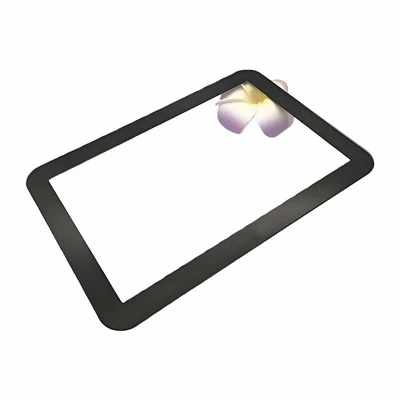
The outermost protective layer on nearly all screens is a piece of cover glass, which often shortened to cover lens in industry. The glass layer serves three core practical purposes:
1.Physical screen protection
It built with high hardness and strong abrasion resistance to anti scratches and absord impact force to keep te underlying fragile display panel intact from normal knocks and friction.
2.Excellent visual performance
Most of the cover glass with anti reflection(AR), anti fingerprint(AF) and anti glare(AG) coatings. the treatments cut down ambient light interference, make the screen content far easier to read under sunlight or bright indoor lighting.
3.More smooth user experience
High ligh transmittance can guarantees crisp and vivid visuals. The excellent smooth surface can feels comfortable to touch. Also anti oil and anti fingerprint coatings mean the screen no need to wipe frequently.
What's the role black play?
You'll find noticeable solid black border printed along the perimeter in every cover glass panel, it called black mask and solves multiple optical and aesthetic problems:
1.Prevent light leakage and edge halos
Without a black mask, the internal backlight can seep out from screen edges, which creates fuzzy glowing halos especially when dark images shown. The black border stray light completely, boosting contrast and making dark tones look deeper and more clean.
2.Cut down glare and surface reflection
The black pigment absorbs stray external light hetting glass edges. It minimizes reflective glare that users can view the screen clearly regardless bright or dim the surrounding light.
3.Create unified and seamless visual appearance
The black mask blends the display edge with device and chassis for a sleek, cohesive look. When the screen is powered off, the whole front surface turns uniform black, eliminate jarring color mismatches between screen and body.
4.Hide internal components
It covers unsightly wiring, adhesive glue and circuit traces tucked under the display edge. In front view, the device looks neat and polished without exposed internal flaws.
3 main manufaturing methods for black mask
The 3 mainstream production techniques are widely used to form black mask on cover glass including screen print, inkjet print and photolithography(yellow light process). Below is the breakdown of each method's working logic, advantages and disadvantages.
1.Screen print
Working principle
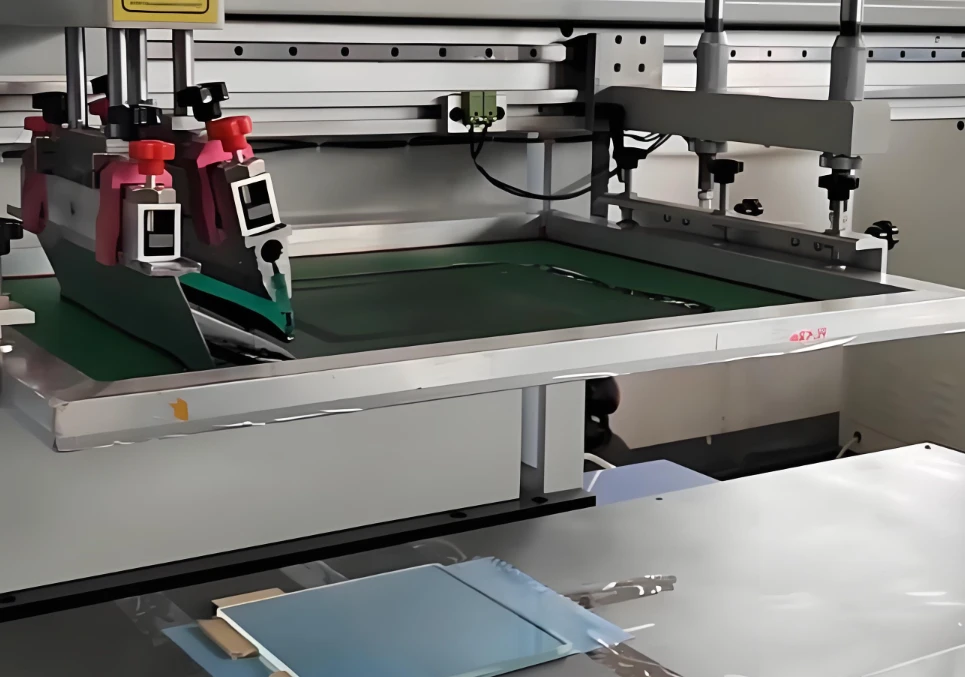
A mesh screen stencil sits above the glass substrate. Ink printed onto the screen, then a squeegee presses and drags the ink from mesh. The ink only flows through open mesh solutions to match the black mask patterns, sealed mesh areas block in entirely leaving precise black borders after ink dry.
Advantages:
1.Mature technology and stable mass production process with low overall cost.
2.Supports large area printing efficiently.
3.High ink opacity and rich black tone, delivers reliable light bloack performance.
4.Compatible with all common glass inks like solvent based, UV curable etc. to meet different durability requirements.
Disdvantages:
1.Printing precision limited, struggles with ultra fine lines or tiny complex patterns.
2.Curing results heavily rely on workshop temperature and humidity, uneven drying happen frequently.
3.Visible cosmetic defects easily formed during printing: Squeegee steaks, orange peel texture from uneven ink laydown and dust particles trapped. Such flaws become much more obvious on large-format glass panels.
2.Inkjet Printing
Inkjet forms black mask by shooting tiny ink droplets straight onto glass without physical stencils, and it carries unique strengths alongside clear limitations.

Working Principle
Digital signals control print nozzles to eject micro ink droplets via pressure or thermal heating. Droplets land exactly on designated glass zones layer by layer, then dry and cure to build up a complete black mask pattern.
Advantages:
1.Excellent high printing precision: droplet size, speed and landing position are digitally controlled, producing ultra-fine, sharp border lines that tight tolerance designs demand.
2.Great gradient and multi-color capacity: mixing different colored ink droplets creates soft color transitions, ideal for gradient black borders or small colored logos on cover glass.
3.Ink-saving & eco-friendly: ink only sprays where printing is needed, cutting waste drastically vs screen printing, less frequent nozzle and equipment cleaning lowers maintenance load.
4.Fast design switching for custom orders: No stencil making required, perfect for small-batch, multi-variety customized cover glass production.
Disdvantages:
1.Slow throughput: Point by point droplet ejection can't match with the high line speeds needs for large valome mass manufacturing, push unit production cost up.
2.High maintenance cost for print heads: Nozzles clog easily from ink impurities or air bubbles, requiring regular cleaning, calibration and replacement to creates frequent production downtime.
3.Weak ink adhesion on smooth bare glass: printed black layers may fade or peel off over long-term friction, hurting mask durability and appearance.
4.Strict ink requirements: special high-viscosity, fast-curing ink formulations are mandatory for stable droplet ejection; premium ink grades raise raw material expenses.
3. Photolithography (Yellow Light Process)
Working Principle
First, evenly coat a photoresist layer all over the cover glass. Next, use a mask aligner to expose the coated glass under UV light, then develop the resist to transfer the pre-designed black mask pattern onto the photoresist film. Finally, etch or deposit black functional layers onto exposed glass areas under the patterned resist protection, then strip off leftover resist to finish the black mask.

Advantages
Industry-leading pattern resolution and dimensional accuracy, capable of extremely intricate, micro-scale black mask designs.
Perfect for high-precision displays such as micro-displays or specialized optical panels, border size, shape and position can be controlled down to micron levels to align flawlessly with other display components.
Disadvantages
Extremely expensive production equipment, plus high technical entry barriers, operatoes need professional training and the workshop demands strict dust free cleanroom conditions.
Over complicate multi steps workflow: Coating, prebaking, exposure, development, etching and resist stripping, each require precise parameter tuning, monor deviations trigger mass quality defects.
Low production efficiency and high manufacturing cost, unsuitable for large scale mass production.
Mandatory Technical Specifications for Black Mask
Color Standard (CIELAB Lab*)
Testing environment: D65 standard light source, d8 measurement geometry
SCI (Specular Component Included): range of combined a* & b* values: -8 ≤ a*,b* ≤ 2
SCE (Specular Component Excluded): range of combined a* & b* values: -4 ≤ a*,b* ≤ 2
Target reference hue under SCI: a* = -1, b* = -3
Surface Adhesion & Bonding Requirements
Black mask zones often bond with other structural parts, so surface energy of the printed area must be controlled above 35 mN/m to guarantee stable adhesive bonding.
Other Core Rules
The black mask layer must reach full opacity to block internal light leakage
Black tone needs adjustable formulas to match the pure black display active area (industry "unified black" aesthetic requirement)


