

Chemically Strengthened Glass vs Thermal Tempered Glass Difference & Selections & Applications
Jun 22, 2026
When custom a piece of glass, we often being asked about the choose of chemically strengthened glass or thermal tempered glass, but actually most of the customers will get puzzle to make this decision, below article explain the difference and help you to make the best choice.
What's chemically strengthened glass and thermal tempered glass?
The chemically strengthened:
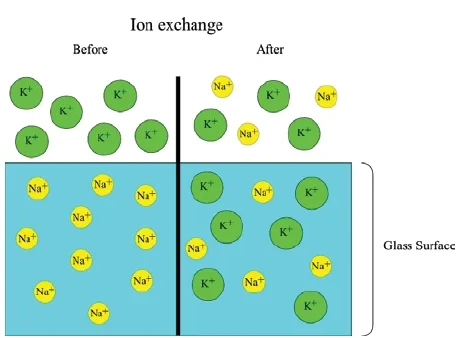
It's a kind of ion exchange chemical reaction on glass surface in a salt bath, the K⁺ ion will replace Na⁺ ion. Since the size of K⁺ ion has larger size than Na⁺ ion, the glass surface filled with K⁺ ion more tight to form a stress layer to resist scratch, impact etc, see below picture for this kind of chemical reaction.
The thermal tempering
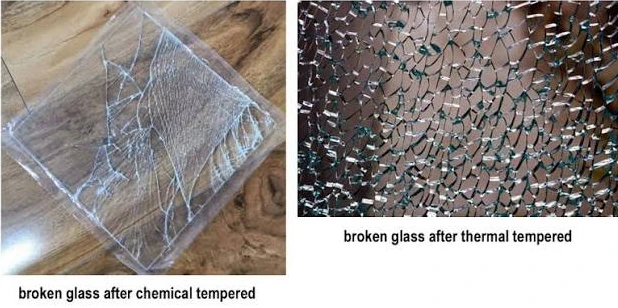
It's a kind of inner structure change through high temperature + strong wind under tempering furnace, the hardness will be 5-6 times better than normal glass, which is a faster and cheaper solutions compare to chemical strenthened.
The thermal tempered glass is also a kind of safety glass that become particles when break.
How to make a selection?
Now you may have a question if thermal tempered is cheaper and faster, why chemical strengthened also can be an option? Let's explain the advantages and disadvantges:
To thermal tempered, the advantages mentioned above but due to strong wind blow the flatness will not be good as chemical strengthened, so thin glass / small size glass isn't suitable to this kind of tempering, we usually recommend 3mm or above.
To chemically strengthened, the advantages not change the glass flatness and clarity but the disadvantages are chemical reaction time is long and costly.
What's the application?
Nowaway, the chemically strengthened usually used in thin glass like cover lens on electronics, phones, smartwatches, tablets etc.
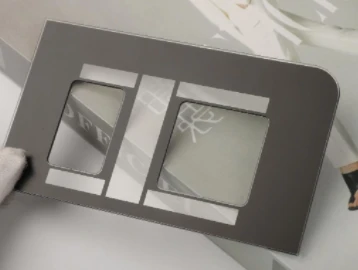
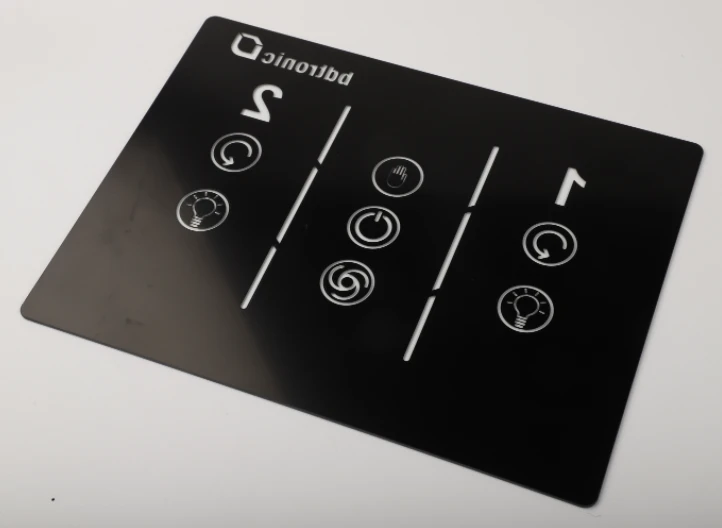
The thermal tempered usually used in thicker glass like appliance, computer, lighting etc.
What should notice when tempering way selected?
To thermal tempered, we usually use particle test(count particle numbers like 60pcs in 50x50mm area) and IK test(Impact test like drop ball) to judge if the tempering effect can meet in your application.
To chemical strengthened, we usually test its DOL(depth of layer, unit by um) and CS(compressive stress, unit by MPa) values to judge if tempering effect good enough.


