

An article to tell principle of AF coating, technology and function
Jun 26, 2026
In cover glass processing industry, we couldn't escape from talking about AF(anti fingerprint), AR(Anti reflective) and AG(anti glare), called 3A.
For this article, we mainly talk about AF including princple, charateristics, technonolgies and functions for your better understand if it suits in your cover glass.
1.The definition of AF
AF means when you touch cover glass surface with your fingers, you will leave behind a mix natural oild, sweat and tiny bits of dust. This mixture we call it fingerprint.
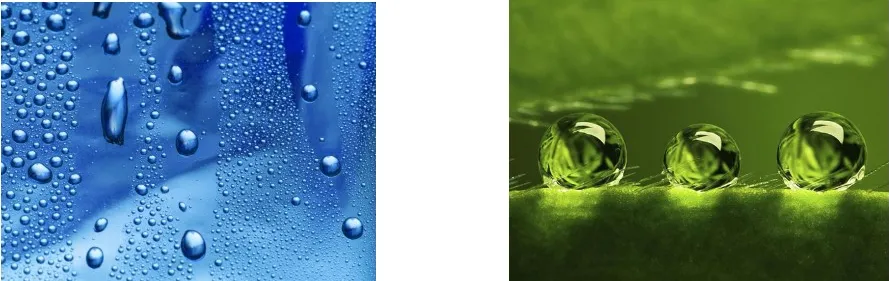
AF coating works very like water beading up on a lotus leaf. It's a kind of thin treatment applied to cover glass surface to change how the surface interacts with liquids and oils. Instead of spreading out and stick, the contaiminants tend to bead up and stay loose that not leave obvious marks.
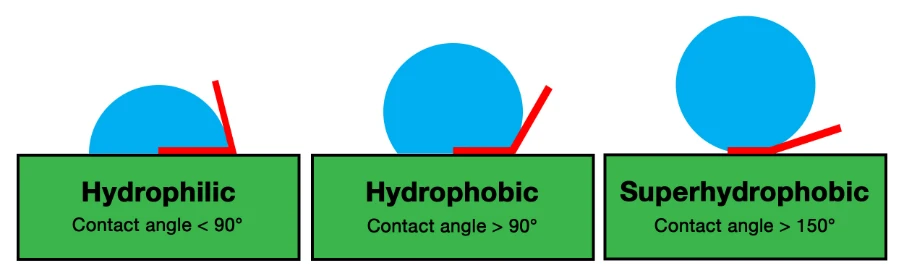
Under AF treatment, the cover glass surface becomes hydrophobic, which means it repel water. The common quality inspection is the water contact angle, usually expects to be 110° or above. In plain terms, it gives the glass a smoother feel and makes it much harder for smudges and fingerprints to stick around.
2.How does AF coating work?
Under a specific manufacturing process, the nano thin layer: Just a few billionths of a meter thick formed on the glass surface. The layer drastically lower the surface tension of the glass, which gives it strong water repellent, oil repellent and anti smudge properties. The result makes glass stay more clear and shinier for longer.
In most of AF coatings, the key ingredients are fluorine based compounds. The mole cular structure contains 2 important functional groups:
A.Active silane group: It acts like an anchor. It chemically bonds with the cover glass surface(specifically with hydroxyl groups on cover glass) to form a strong and durable connection.
B.Organic fluorine group: It's the non stick part. It offers extremely low surface tension to give the coating capable to repel water, resist oils and fight off fingerprints.
To be simple, the silane part grabs onto the cover glass while the fluorine part does the repelling. When exposed to moisture in the air, the silane groups convert into a form that readily bonds with the glass surface, locking the AF layer in place.
3.What makes AF coating special?
There are other ways to make cover glass resist smudges: Just like apply anti fouling coatings, micro engraving textures, or using anti-glare etching. But lots of these methods tend to reduce clarity, change the surface texture, or make the glass feel less smooth.
It's the reason why display cover glass used in full lamination modules, AF coating remains the go-to choice. It usually applied by evaporation or spraying, and it offers a few distinct advantages:
a. It doesn't alter the original texture or appearance of the glass.
b. It keeps optical performance intact, no noticeable reduce in light transmission.
c. It gives very low surface tension, so water, oil, and fingerprints don't easily stick.
d. It holds up well against weather, chemicals, and repeated rubbing, while also providing a low friction feel that makes touch interaction smooth and pleasant.
4.Main AF Coating Processes
Broadly speaking, thin coating deposition comes in two flavors: PVD (Physical Vapor Deposition) and CVD (Chemical Vapor Deposition). PVD itself includes methods like evaporation, sputtering, and ion plating.
For AF coatings specifically, two processes dominate:
Vacuum evaporation coating (often just called evaporation)
Spray coating (a wet process)
Let's break each one down.
Vacuum evaporation process
In a vacuum chamber, an electron beam is used to heat AF coating material until it evaporates. The vapor then condenses on the glass surface, forming a dense, uniform AF layer.
Before that happens, the glass parts are thoroughly cleaned, arranged on fixtures, and hung inside the coating chamber.
A key step in this process is that a thin layer of SiO₂ is first deposited onto the glass as a bonding bridge, followed by the AF layer itself.
After coating, the glass is removed and left to sit in a clean room for at least two hours before any protective film is applied.
Why the waiting time? Right after evaporation, the AF layer isn't fully stabilized. Let it rest allows any remaining reactive groups to finish bonding, which improves adhesion and wear resistance.
Spray coating process
Spray coating developed as a more affordable, higher-throughput alternative to vacuum evaporation.
In this method, AF liquid is sprayed evenly onto the glass surface using high pressure. The glass is then baked at around 160–180°C for 10–15 minutes to strengthen the bonding between the AF layer and the glass.
The process flow is simpler than evaporation: typically just plasma cleaning, AF spraying, baking, visual inspection, and packing.
The big difference? Evaporation includes an SiO₂ transition layer that bonds directly with the glass in the vacuum chamber. Spray coating skips that layer. As a result, vacuum-evaporated AF films generally perform better in tougher tests: think abrasion resistance and chemical durability.
Here's a quick summary of how the two stack up:
Vacuum evaporation: better overall performance, especially for high-end or AR-coated products, but costs more and has lower throughput.
Spray coating: cheaper and faster, good enough for mid-range or budget products where extreme durability isn't critical.
How We Check AF Coating Quality
After AF coating, it's important to run a few tests to make sure the film actually performs as expected. These tests also help fine-tune the material selection and process parameters.
There are three main evaluation methods:
① Water contact angle test
This measures the angle formed between a droplet of water and the glass surface. A higher angle means better water repellency.
Purpose: to evaluate fingerprint resistance.
Method: place the glass with the coated side up, and measure the contact angle at five different spots to check uniformity.
Pass mark: generally ≥110°, with tighter specs asking for ≥115°.
② Abrasion resistance test
This checks how well the AF layer holds up against physical rubbing – usually using steel wool or an eraser.
Purpose: to test durability and wear resistance.
Method: measure the initial contact angle (should be ≥110°). Then, using a 20×20 mm pad with 0000# steel wool or eraser, apply a 1000g load and rub back and forth at 40 cycles per minute over a 40mm stroke for 2000 cycles. After that, measure the contact angle again at three points inside the rubbed area.
Pass mark: the AF layer should not peel off, and the contact angle should stay above 100°.
③ Dynamic friction coefficient test
Some customers don't require this test, but it's a good indicator of how smooth the glass feels to the touch. Untreated glass has high friction and feels sticky or draggy.
Purpose: to evaluate tactile smoothness.
Method: place a 200g weight wrapped with a specific type of paper on the coated glass, and pull it at 100 mm/min over a 50mm distance.
Pass mark: friction coefficient ≤0.05 normally, or ≤0.03 for stricter requirements.


